While creating your online portfolio, you come across so many ideas. You want to showcase every client project, dump in every daily render exercise, and add endless galleries to prove what you can do. But when you start uploading high-bitrate video files, you quickly hit a wall, pages start to lag, mobile layouts break, and your best work gets buried in the clutter.
Stop packing your portfolio with every render you own. To land high-paying clients, all you need is a tight lineup of your best motion work, zero video buffering, and a clear layout that proves your value instantly.
Whether you specialize in 2D title sequences, commercial UI animation, 3D broadcast packages, or visual effects, an online motion designer portfolio acts as your primary sales engine. It shows producers and potential clients how you bring static concepts to life through movement, timing, and sound.
Why Motion Designers Need an Online Portfolio
Relying solely on social media feeds like Instagram, Vimeo, or Behance limits how you control your work’s presentation. Algorithms change, video compression destroys sharp frame details, and client context gets lost in endless scrolling feeds.
A dedicated website gives you complete control over your personal brand. It lets you present full-resolution video reels alongside client briefs, storyboard sketches, tool stacks, and direct booking links. When creative directors look to hire a freelance motion designer, they expect a distraction-free site that loads instantly and plays back smoothly without buffer lag.
How Animation and Video Demonstrate Creative Skills
Static images only reveal part of your technical ability. Video shows how you handle time-based design principles like pacing, weight, easing, rhythm, and audio integration.
- Pacing and Rhythm: Video displays how effectively you control viewer attention over 5 to 30 seconds.
- Technical Artistry: Motion sequences prove your mastery over software pipelines, camera tracking, particle systems, and 3D lighting.
- Problem Solving: Pairing finished animations with early style frames proves you can turn abstract brand guidelines into engaging motion assets, similar to structuring a compelling graphic design portfolio.
What to Include in a Motion Graphic Design Portfolio
1. Choose the Right Portfolio Platform
Video files are heavy. Generic website builders cause slow page loads and clunky playback. Fabrik uses zero-canvas, media-first architecture that handles high-bitrate video streaming automatically, keeping your site sharp on all devices.
2. Create a Strong Portfolio Homepage
Capture attention in under three seconds. Lead with a tight, 30 to 60-second showreel placed right at the top of the page, followed by a clean grid displaying your top 6 to 8 project case studies.
3. Showcase Your Best Animation Work
Quality always beats quantity. Select only your polished, high-impact pieces. If you want to show broader visual exploration, group smaller experiments into a single “R&D / Motion Studies” entry.
4. Build Detailed Project Case Studies
Give viewers context by building out a complete story for each project:
- The Brief: The client’s commercial objective.
- Your Role: Art direction, 3D modeling, rigging, compositing, or sound design.
- The Final Output: Full-length, high-resolution video embeds.
- The Impact: How the final motion piece performed for the brand.
5. Optimize Videos for Your Portfolio Website
Always encode web videos using H.264 or HEVC codecs in an MP4 container. Keep bitrates balanced, so playback starts immediately without buffering. For looping background previews, strip the audio track to cut file sizes in half.
6. Show Your Creative Process
Include process assets like mood boards, hand-drawn storyboards, animations, wireframe 3D passes, and After Effects timeline snapshots.
7. Use Motion to Enhance the User Experience
Incorporate subtle hover states, smooth page transitions, and muted autoplay video previews on project cards. Keep navigation clean so UI movement doesn’t slow down browsing.
8. Make Your Portfolio Mobile-Friendly
Ensure video players resize natively without clipping edges. Fabrik’s adaptive layouts scale video containers across desktop, tablet, and mobile displays automatically.
9. Write Effective Project Descriptions
Keep project write-ups brief. Outline the client/studio, software used (After Effects, Cinema 4D, Houdini, Unreal Engine), and key deliverables using quick bullet points.
- Client / Studio: Who hired
- Software Used: After Effects, Cinema 4D, Houdini, Unreal Engine, Nuke.
- Deliverables: Broadcast package, social campaign, UI animation, main title sequence.
10. Highlight Your Tools and Skills
Include an “About” page listing your software proficiency and production capabilities. State clearly whether you work as a 2D animator, 3D generalist, art director, or CG supervisor.
11. Add Testimonials and Client Work
Place 1–2 sentence reviews from producers or agency leads right inside your case studies to build instant trust.
12. Optimize Your Motion Design Portfolio for SEO
Target relevant search terms like motion graphic design portfolio, motion graphics portfolio, and motion designer portfolio in your meta tags, image alt text, and headings.
Common Motion Portfolio Mistakes to Avoid
- Relying Solely on a Showreel: Reels get attention, but studio leads need individual project case studies to evaluate your full production skills.
- Autoplay Videos with Loud Audio: Unmuted audio startles visitors instantly. Always mute autoplay previews by default.
- Slow Video Buffering: Host videos through optimized web embeds rather than raw, uncompressed 4K files.
- Hiding Contact Info: Place a direct email address and contact link right in your main navigation bar and footer.
Motion Graphics Portfolio Examples
Reviewing real motion graphics portfolio examples shows how industry leaders structure their work:
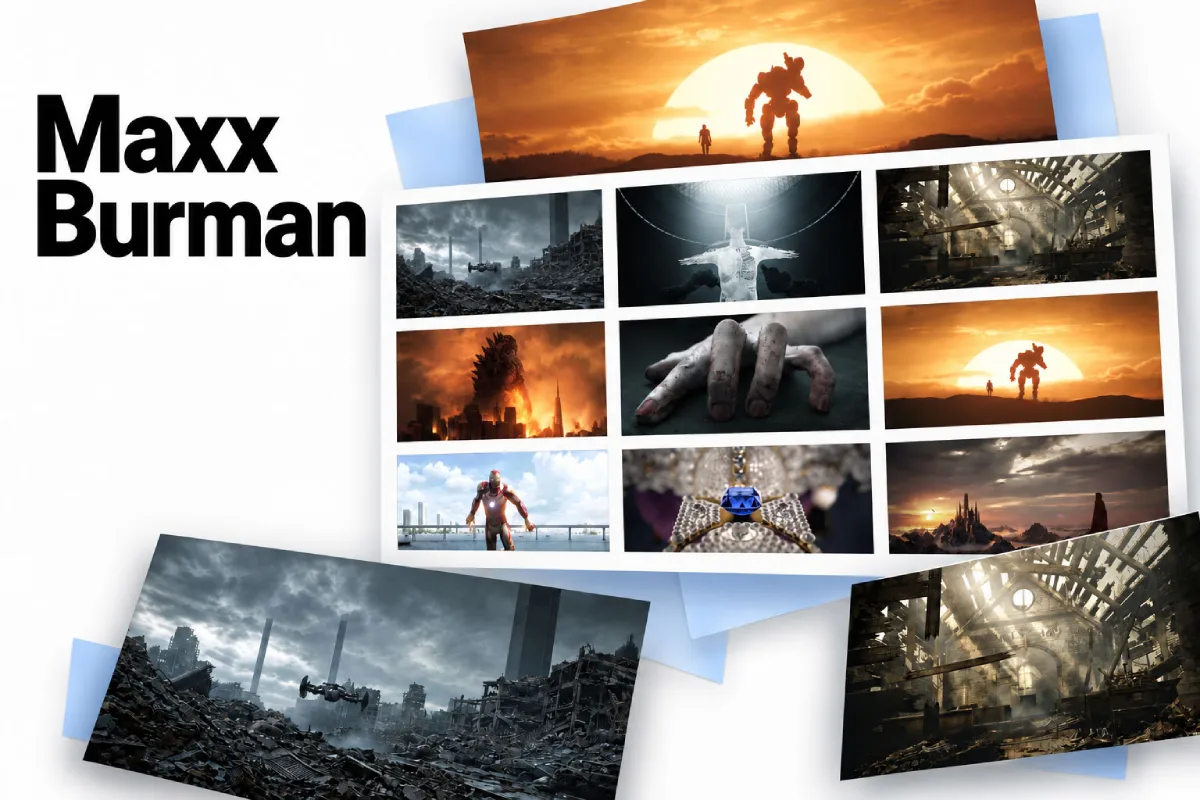
- Maxx Burman (Art Director & Visual Effects Creator): Highlights cinematic scale by pairing final composited VFX sequences with detailed breakdowns of concept art and digital environment passes.
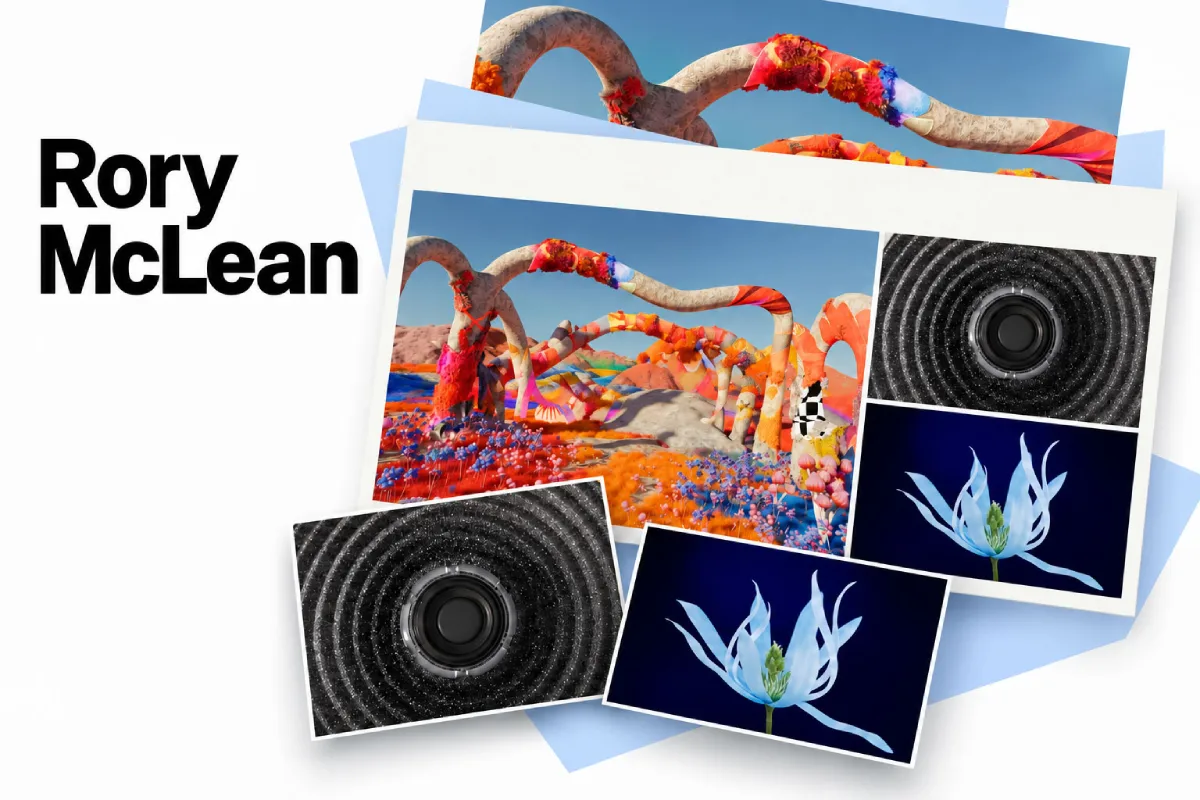
- Rory McLean (3D + Motion): Demonstrates how to present a clean 3D motion design portfolio using high-frame-rate video loops and full-width renders that load instantly.
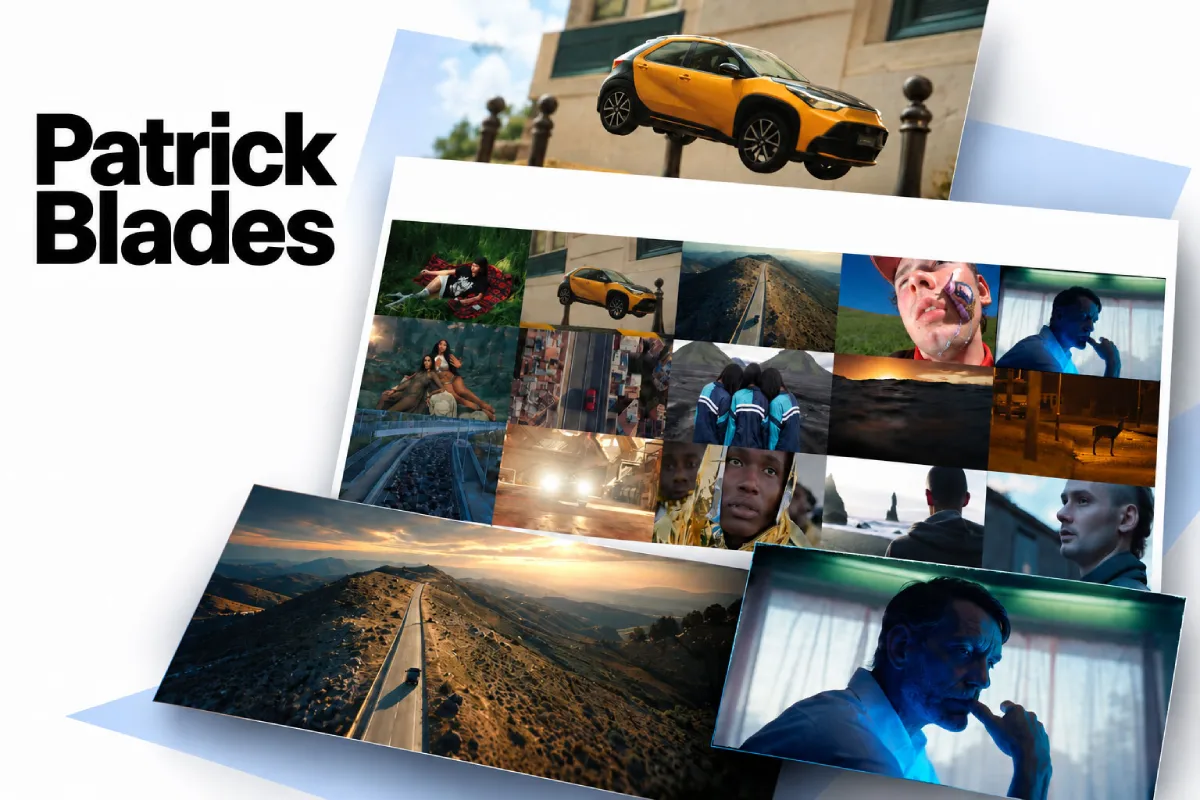
- Patrick Blades (Director & Creative CG): Features a diverse mix of commercial CG direction, broadcast graphics, and title design, bridging technical 3D execution with creative direction.
Ready to launch a clean, responsive site that showcases your animation and video work without lag?